
Summer Academy 2019 with OECD Trento
EU&CULTURE at an OECD’s Summer Academy
Cultural and Creative Industries and Local Development
EU&CULTURE took part in the 2nd OECD Trento Office Summer Academy with about 30 participants and 28 nationalities represented. Five days (16-20 June 2019) of debates, on-site visits, interview-style sessions with key local actors, special guests from the creative and cultural sector and a publication, to find creative solutions to contemporary challenges for the cultural and creative industries.
For the 2019 edition, 3 main dilemmas were identified:
- Tradition vs Innovation (keywords: digital transformation, cultural production and consumption, the role/identity of museums and other cultural institutions in contemporary society)
- Preservation vs (Re)activation (keywords: urban/rural regeneration, creative identity of places, sustainability)
- Linear development vs Holistic approach (keywords: cross-sectorial policies, embedding creativity in local systems, cross innovation, skills for a creative city.
An introduction to…
The OECD Trento Office
Provides policy advice and develop capacities for the design and implementation of policies, always tailored to local needs and focused on the key local actors, for OECD Member and non-Member countries.
- – The Summer Academy is a three-year project dedicated to gathering policymakers and representatives of cultural and creative industries.
- – To develop expertise in putting in place effective and integrated strategies and policy frameworks
- – To identify local economic drivers and reflect on solutions with participants from all over the world
- For OECD Member and non-Member countries For OECD Member and non-Member countri
Training session #1 European Funds
EU&CULTURE first training session
Launching night and training session
Thanks to the support of the Carrefour des Associations Parisiennes, EU&CULTURE organised its first training session along with its launching night in Paris, one June 1st 2018.
The general topic, ‘European Entrepreneurship, a challenge for young graduates’, deepended various themes, such as the existing opportunities for young entrepreneurs, the French entrepreneurship ecosystem, and the European opportunities of development. The Europe Creative programme was explained in details as well as the required elements to apply and the recommended method to build an application.
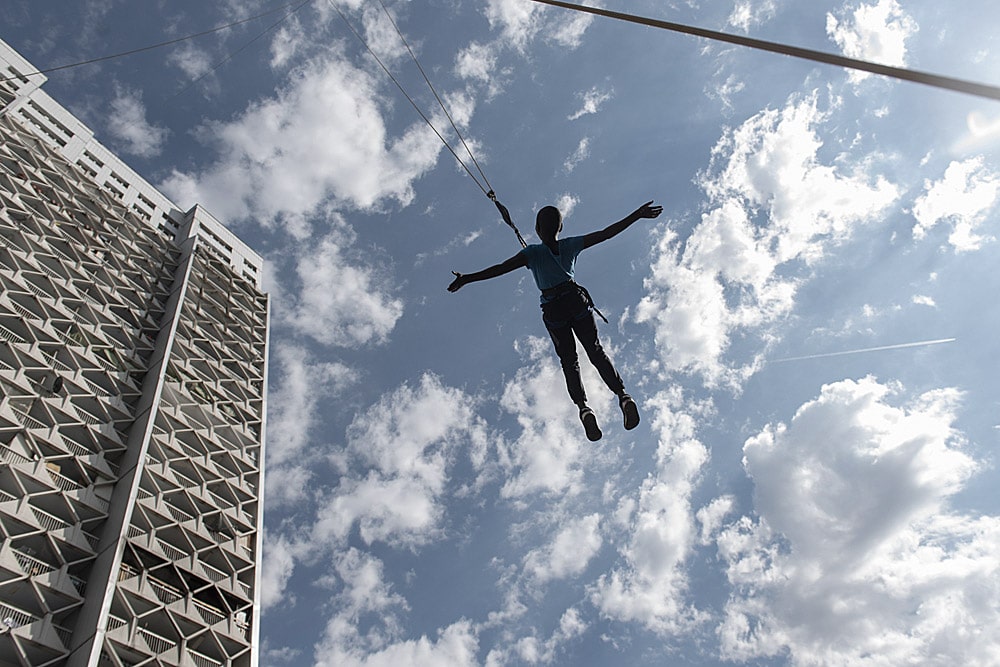
The second part of the session was dedicated to the interview of Fabrice Guillot, Artistic Director of the vertical dance company Retouramont. The company develops and support an emerging artistic practice and received the Europe Creative funds to develop its project. Along with 6 other international stakeholders and compagnies of vertical dance, they created the Vertical Dance Forum. Many and warm thanks to Fabrice Guillot and the entire Retouramont company for sharing their time and experience with us !
An introduction to…
Company RETOURAMONT
Pioneer in the practice of vertical dance, the company is a higly-qualitative reference in the field.
- – A unique artistic vision in dialogue with the cities’ architecture and features
- – Tailored trainings to vertical dance and artistic residencies
- – Leader of the Vertical Dance Forum, a network of 7 choreographers specialised in vertical dance across Europe and in Canada
Carrefour des Associations Parisiennes
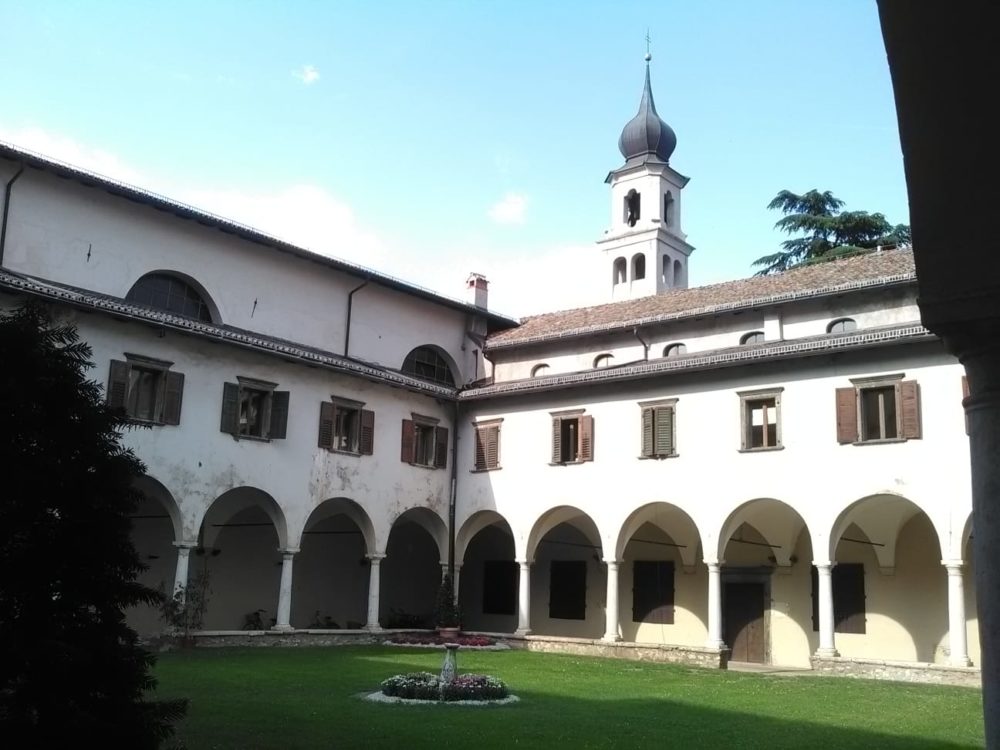
Known as ‘CAP’ and supported by the city of Paris, the space is a key stakeholder in the associative life.
- A centre to support and develop the associative life in Paris
- Events such as the Agora, free legal consulting and tailored advice to the associations’ needs
- A network of partners in the city
(1) Photography credits / copyright: cie Retouramont
CREATIVE EUROPE Introduction
CREATIVE EUROPE: MAIN CULTURAL PROGRAMME
The call for projects
The call for projects is open to any country member of the European Union, and to some other non-member:
- Albania
- Bosnia Herzegovina
- Former Yugoslav Republic of Macedonia
- Georgia
- Island
- Norway
- Moldavia
- Montenegro
- Serbia
- Ukrainia
Under certain conditions, some countries member of the EEA (European Economic Area) or of the ENP (European Neighbourhood Policy) can join an applicant team, with an equal status as European Union countries.
The call for projects topics:
- Arts and culture (31% of the selected projects)
- Audiovisual (56%)
- Cross-sectoral (arts + culture + audiovisual, 13%)
The application
Two types of application :
– SMALLER SCALE PROJECT: a project leader + 2 European partners = 3 different nationalities. Funding: maximum 60% of the applicant budget.
– LARGER SCALE PROJECT: a project leader + minimum 5 European partners = 6 different nationalities. Funding: maximum 50% of the applicant budget.
Who can apply ?
– Any active professional in the culture and creative fields
– With a legal presence in the countries listed above (that is to say with a number of activity or national registration)
Required elements to apply
– The application form
– The « 40 000 » signs aimed to explain the coherence of the project (partnership, public, philosophy etc.)
– The estimated budget including the 60% or the 50% of the European funding + the 40% or the 50% to find elsewhere.
– The project global schedule + The global communication plan